Looking back at the history of
Back Street
and Sand lane,
Biggleswade
by Ken Page
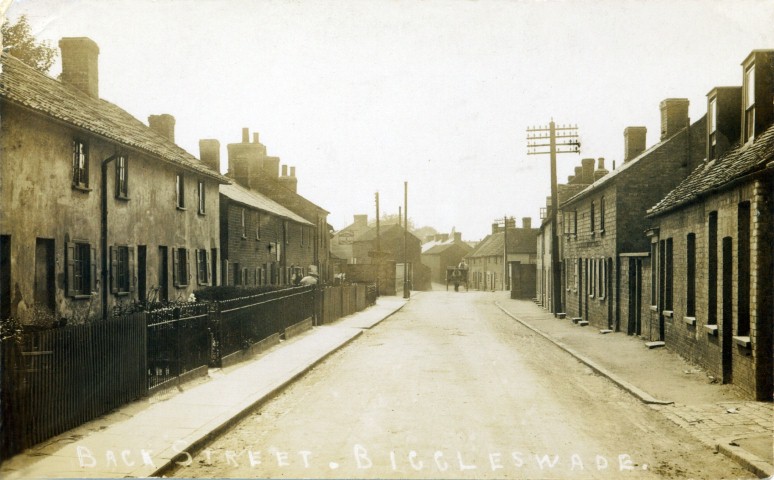
Back Street looking west from near London Road
in 1904
Apart from two cottages this area is entirely rebuilt
The
horse-drawn cart is about to cross the railway bridge
then pass
in front of the pub 'Bridge House where the sign can just be seen
on the left.
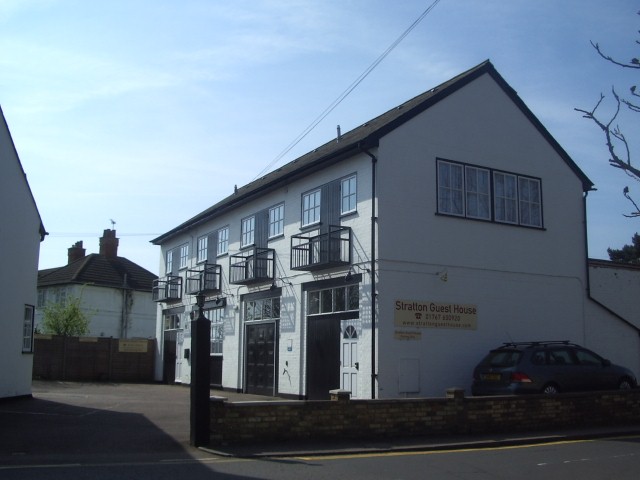
Starting from The Retreat Beauty Spa in London Road. The original building is a period cottage adapted by Tunnard's potato merchants in the 1930s by adding a new extension office facing Dells Lane and the Potato warehouse in Back Street. It was adapted as a Bed & Breakfast guest house as Stratton Cottage. The original Victorian Stratton Cottage is opposite at the end of our tour.
|
|
|
|
Retreat Beauty Spa at No 1 London
Road 2011 |
Former potato warehouse converted
to |

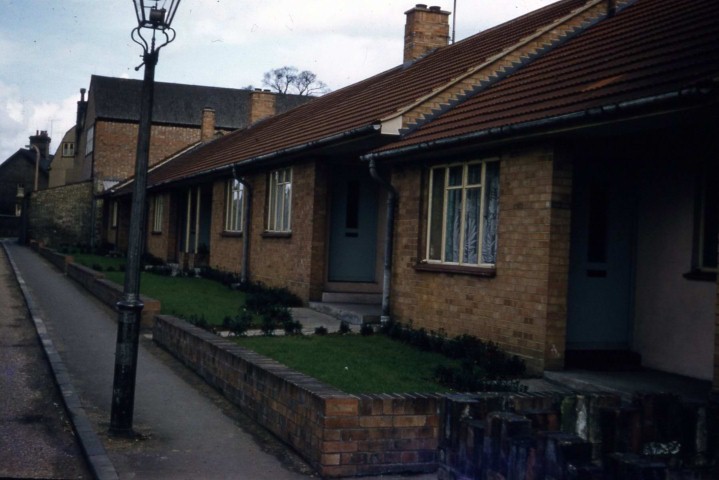
Numbers 1 to 23
When one block of six timber-framed
buildings collapsed in 1951, they were already condemned and speedily
demolished. Mrs Heard who was still living in no 11 was rehoused.
These were demolished in 1954 and the Urban District Council replaced
them with six old people's bungalows (No 1-11) early 1950s at a cost
of £5,000.
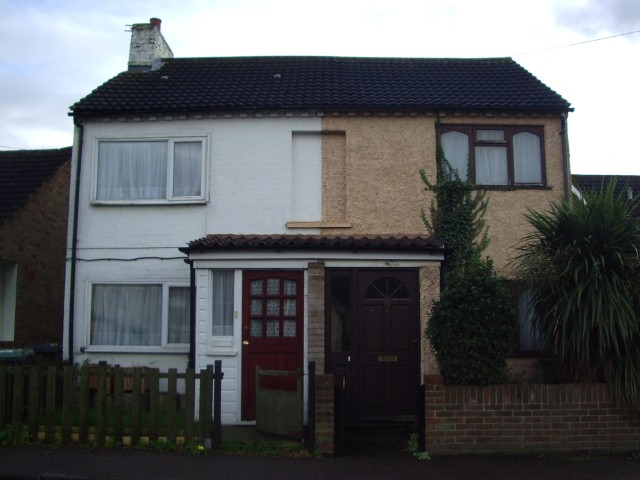
25 and 27 are the only Victorian cottages remaining and have been considerably altered.
|
|
|
|
|
Bungalows 1 to 11 (seen here in 2007) replaced the old cottages Nos 1 to 23 that were demolished in 1954 |
Seen here in 1957 looking east |
In the distance is Tunnards |
|
|
|
|
|
|
|
|
|
Back Street 1967 |
25 and 27 Back Street 2007 |
25 and 27 Back Street 2010 |



Numbers 29 and 31
The
site of 29 and 31 was where Bridge House, a beer house, once stood;
it is marked as property 25 on the 1899 Wells & Co Brewery
plan below. Deeds show that in 1827 James Bontell,
carpenter purchased a piece of land formally part of Delves piece
now Hancock's Field to build two houses. He occupied one and let
the other to James Huckle. He died in 1847 and his son sold both
houses to Robert Twelvetrees baker in 1864 for £205. William
Chew and William Wade were the next occupants. The houses were sold in 1869 to Weston & Powers, brewers
for £297. According to the licensing list Bridge House was established in 1857.
Wells & Co, later Wells & Winch Ltd, purchased Bridge House in 1875. In September 1901 the licensee Charles Bland was convicted by Biggleswade Magistrates of stealing manure to the value of one shilling, he was fined £2 plus 7/6d costs. He forfeited his licence.
Bridge House closed in 1936 and was let as a cottage until 1972. A pair of bungalows were built in 1995 on the plot that included a site of empty ground belonging to Biggleswade Scout Group This was originally intended as a site for their headquarters.

|
|
|
|
The bungalows at
No 29 and 31 Back Street are seen |
Back Street bungalows
built
in 1995. |


|
|
| Back Street
hailstorm May 1967. |

Immediately before crossing the railway bridge, which was originally built in 1850 and rebuilt in the late 1960s, there is a footpath leading to the railway station.
Listed in the 1841 census there was a beer house in the vicinity described as The Red House and occupied by one Alexander Medlock. This could have been where the cutting was made for the railway 1850.
On the west side of the railway bridge there were two cottages occupied by Joseph Allen and family with a scrap yard.
There were a further three cottages before Rose Villa on the corner of Station Road; demolished when the Post Office opened on 13th January 1899 and knocked down in 1982. The Royal mail Delivery Office is part of the present complex. None of the old buildings in Back Street from the railway bridge to Station Road have survived.
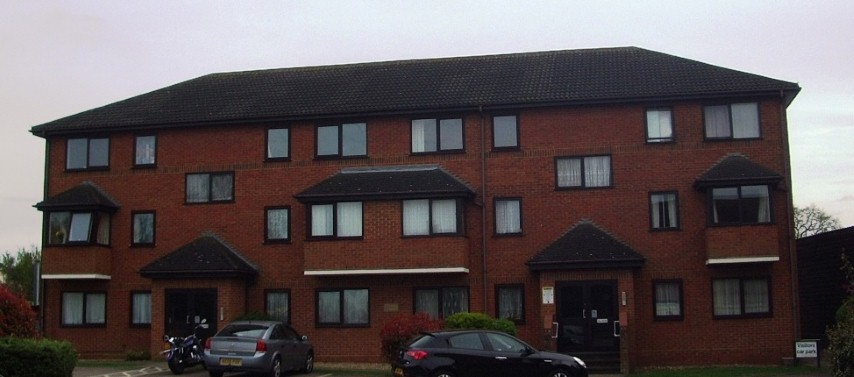
Next to the bridge is 1982 is Cavendish Court containing flats 33 to 55 Back Street.
|
|
|
|
The site of Joseph
Allen's original scrap yard |
Cavendish Court
in 2015 - No 33 to 55 Back Street. |

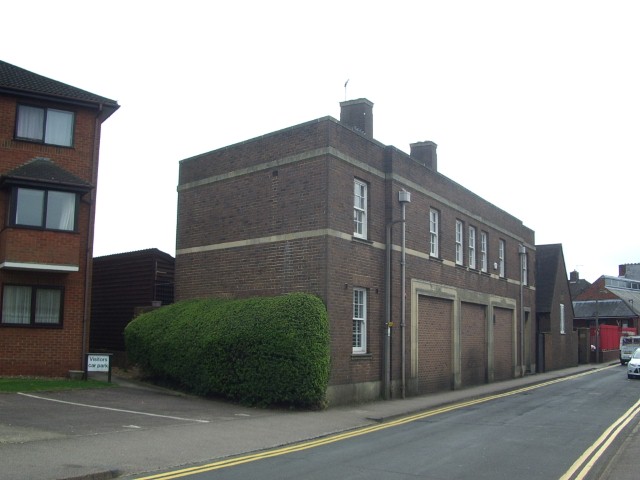
Then come the garages which were built as part of the Police Station in Station Road built in 1938, these are now in use for other police purposes.
|
|
|
|
Now the original
garages for the Police Station |
|
|
This was the rear
of the Police Station in 1957 showing |

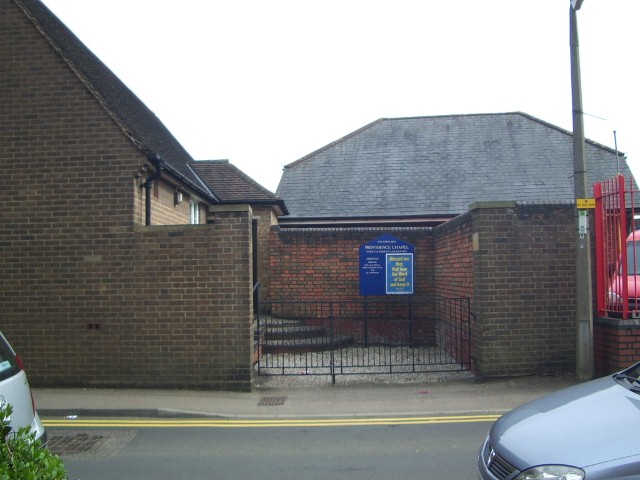
The former Telephone Exchange built in 1938 and closed in 1972 is now converted into the new Providence Chapel. For information about the old chapel see Victoria Court below.
|
|
|
|
|
Above is the new Providence Baptist Chapel in 2015 on the site of the former telephone exchange.
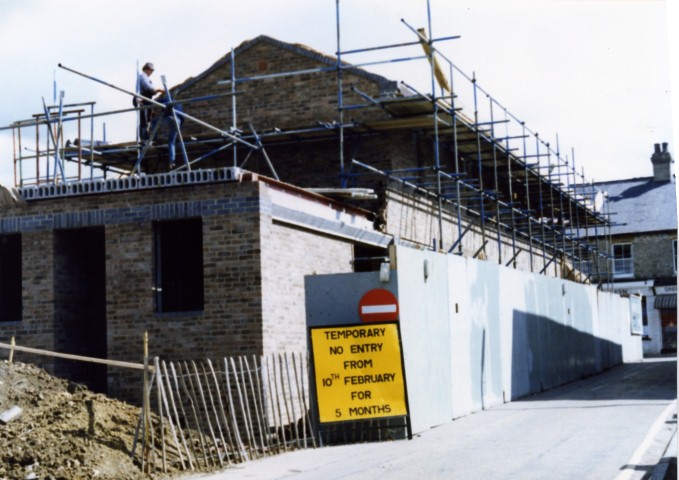
Top centre is
the new Post Office under construction. |
|
|

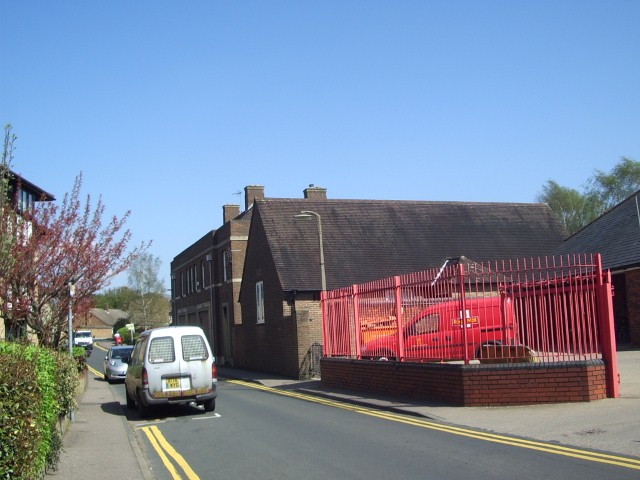
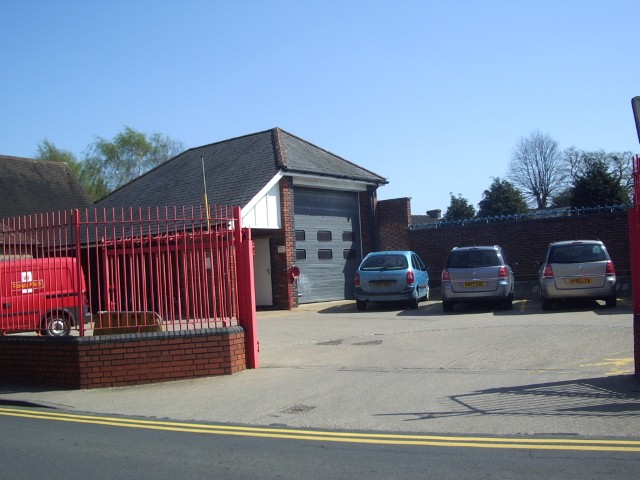
Returning to London Road via Sand Lane to the Market Square and along the north side of Back Street
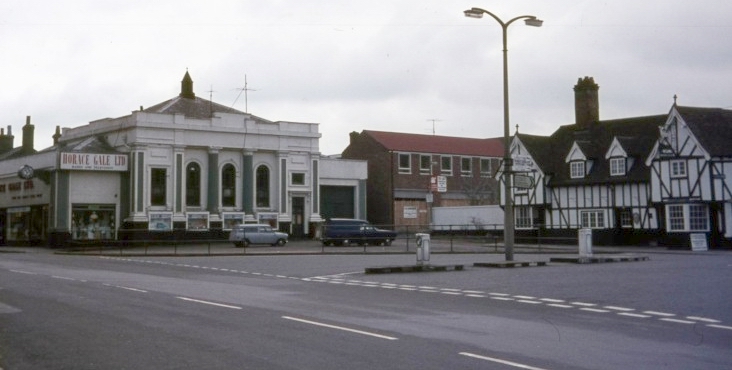
The Regal Cinema, now Flutters Bingo Club, opened on Monday 27th July 1936 (see Station Road page).
|
|
|
|
The Regal Cinema
before it became a bingo hall. |
At the back of
the old Regal cinema is Flutters bingo club car park
in 2007. |


Sand Lane (renamed Victoria Place after 1990)
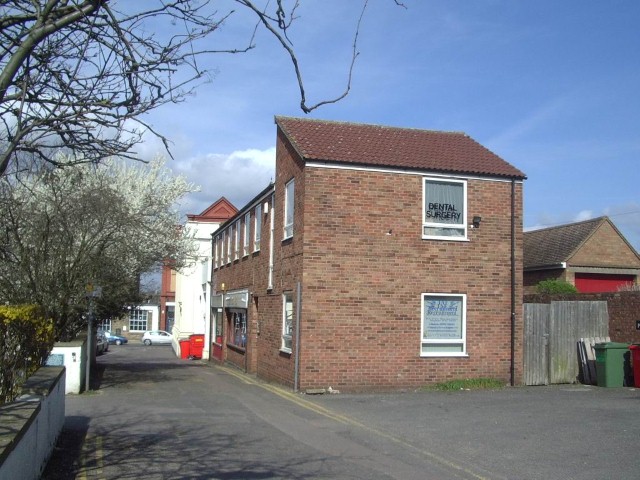
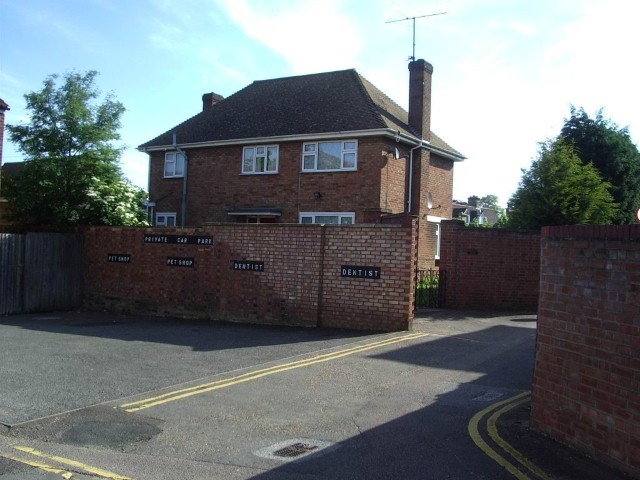
Starting in Back Street the site of two cottages and other land became the Regal cinema car park in 1936. Beyond were two Looking from Back Street towards the Market Square, the Town Hall on the far right and the High Street beyond the site of cottages can be seen in Sand Lane and further land behind the White Hart was added to the car park in September of that year. Coming back up Sand Lane from The Town Hall one would have seen The Catholic Church which opened in what was called the Small Town Hall in 1924. This building was replaced by the present two shops and dentists surgery in 1973.
|
|
|
On the right is the old St Peter's Catholic Church in 1957. This was replaced with shops as shown below in 1976. The two cottages seen in the photograph on the left have now gone too and become part of the White Hart car park. |
|
|
In the photograph above the Regal cinema car park is on the left and cottages beyond are there in 1957. On the right of the picture the roof of the old Catholic Church can just be seen but occupying most of the scene is 'Joey' Allen's second scrap yard. |
|
|
|


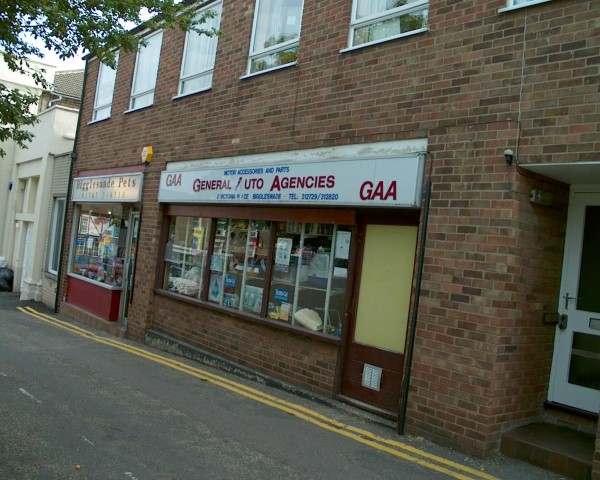
Below are the two shops and dental surgery built in 1973/76 that replaced the old Catholic Church.
|
|
|
|
|
Victoria Place (Sand Lane) in 2003 |
Victoria Place (Sand Lane) in 2009 |
|

Camberley House on the corner with Sand Pit Walk was built for
Joseph Allen. He also owned the scrap yard where the sandpit was
located.
The eight Victorian houses, now demolished, went through
to Roothams Twitchell.
|
|
|
|
|
Sand Lane Camberley House 2007 |
Sand Pit Lane 2007 |
Joseph Allen's scrap yard 1957 |
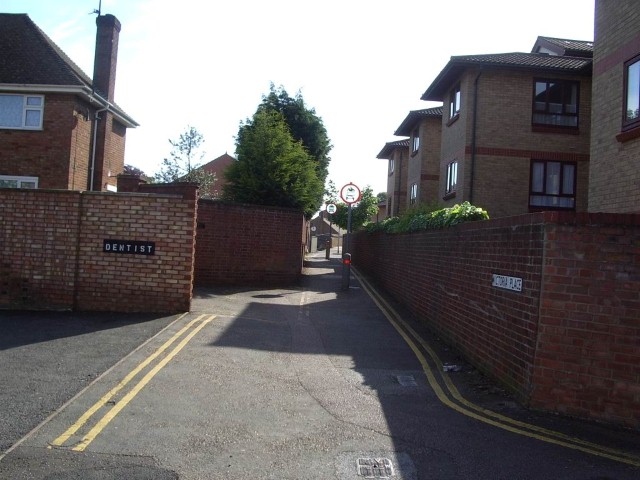

Looking into Victoria Place on the right, where Joseph Allen's scrap yard later was, there were originally a row of cottages.
In the 1841 census there were 48 houses in Back Street, plus 19 more described as 'Sandpits'.
Local historian Mr A.W. Watkin recalled that many years ago there was old gravel pit on part of the site where Victoria Court now stands. In one corner were the remains of a building known as The Cage. His father told him that this was a building once used as a lock up where drunks and lawbreakers were temporarily housed. The building was earthed over on top and had a heavy iron barred door. The excavated sand was very convenient for building numerous cottages nearby.
The Woolpack beer house (item 26 on the 1899 plan above) was first licensed in 1846 when Wells & Co, the Biggleswade brewers, purchased a site. The pub was most likely converted from a cottage. There were two front and two back rooms , a kitchen three bedrooms and a cellar in the basement. A yard with gates to the road, washhouse Lofts and WC. Mr Cotton was licensee in 1905/6 and left because he could not make a living. There were two more tenants before it closed in 1907 and sold to Mr R.W. Wright for £90in 1908 in 1908.
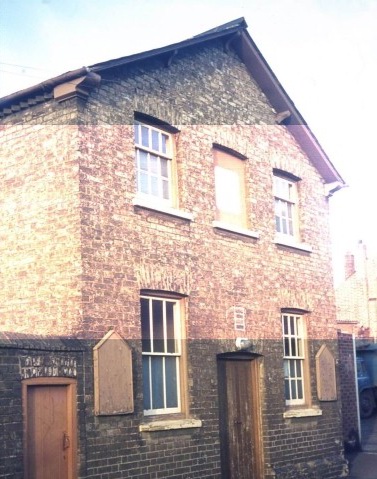
Next to the pub was The Providence Strict Baptist Chapel built above old cottages on a site “abutting northward on the Town Cage” It opened on 18th July 1843 built to accommodate about 250 persons. It was soon full and enlarged about three years later holding 390 but was again soon full. Typical Sunday attendances in 1851 were morning 200, afternoon 300 and evening 300. The cottages were converted into a Sunday school in the basement. In 1874 there were 120 pupils and 10 teachers. Back Street was built up during the years leaving the Chapel below street level. By 1970 the trustees realised that the chapel was in need of considerable repair.
|
|
|
|
|
.old Providence Chapel 1975 |
old Providence Particular Baptist Chapel detail in 1987 |
old Providence
Chapel 1987 |

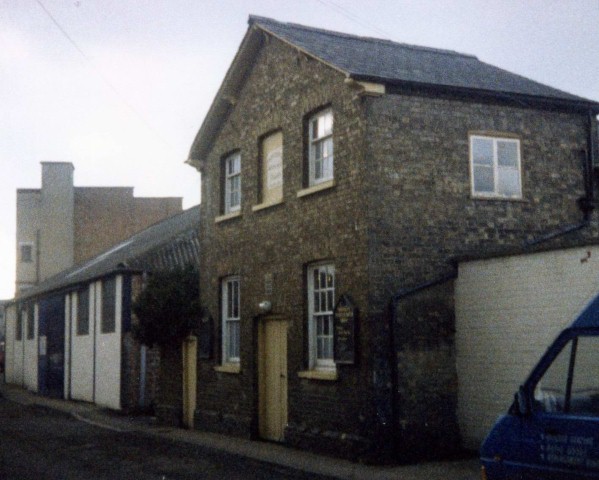
Joseph Allen sold the scrap yard to Mr S. W. Wood (Baldock Metals Ltd) in 1964.
Richard Larkinson was the grandson of Frederick Larkinson. His father Harry Larkinson died shortly before his grandfather. Richard gradually built up his own business and purchased the scrap yard. He already owned the former telephone exchange and it was agreed that it could be converted into a new chapel. This opened on 11th October 1987 and the chapel was demolished.
The site was cleared and Victoria Court containing 24 flats was completed in 1989.
|
|
|
|
|
|
Victoria Court
advertisement in the |
|
|
|
|
|
|
Victoria Court 1995 |
Victoria Court 2007 |
Victoria Court 2010 |

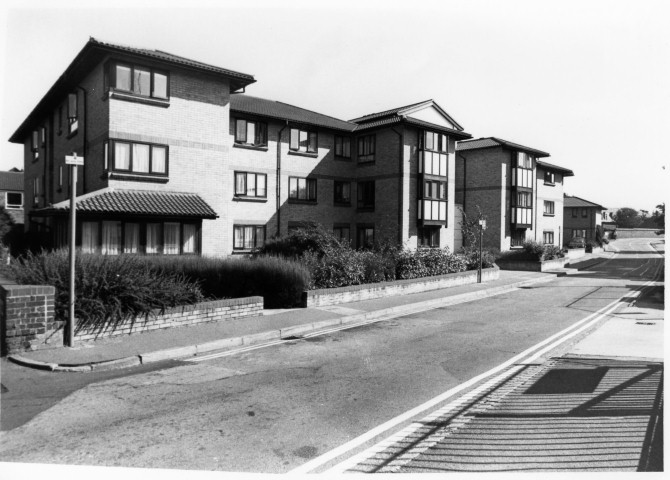
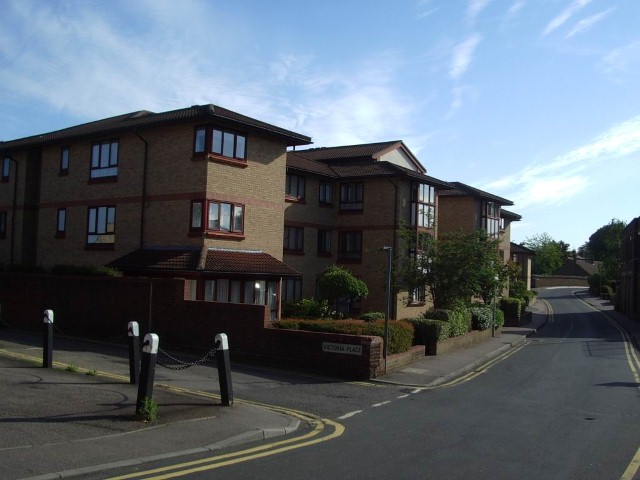

Flats have replaced the rear entrance to Hubbard's greengrocers. The other side was Roothams Terrace where King & Bowles (Les King and Ron Bowles) established their carpet store and fitting service here from 1970 to 1986. When Ron retired Les continued with Gareth Griffiths (King & Griffiths) until 1989. This was replaced by Pedals' the Biggleswade cycle shop owned by Les Williams; he moved to Shortmead Street in 2014. Between Roothams Twitchell and the Railway Bridge were more old cottages and houses including the location occupied by Pedals and a derelict yard behind what was the Shoulder of Mutton' (item 24 on the 1889 plan above).
|
|
To re-orientate the photo on the left, taken in 2007, is from the car park outside the former 'Pedals' business and looking west along Sand Pit Walk towards Sand Lane (now Victoria Place). Victoria Court is on the left
The photo on the
right shows the flats and the |
|
|
Back Street & Sand Pit Walk 2007 |
|
Pedals 2009 |
|
|
|
|
|
Hubbards back entrance
|
Back Street Roothams
Terrace 1957 |
Roothams Twitchell 2009. |
|
|
|
|
|
Pedals 2009 |
Pedals 2009 |
Pedals moved to 72 Shortmead Street |


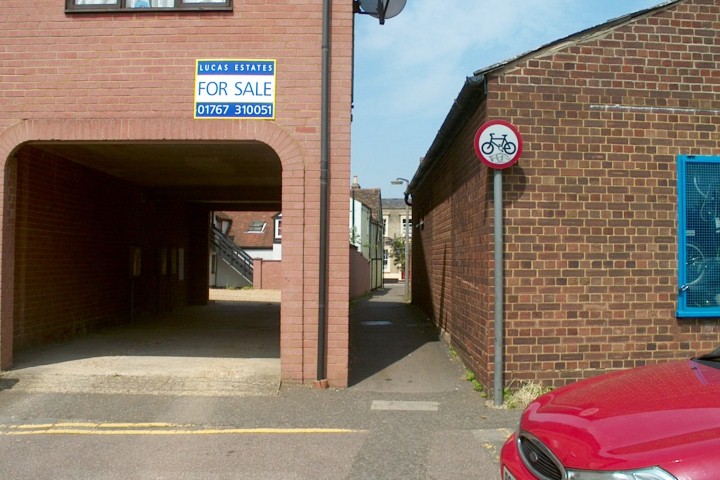


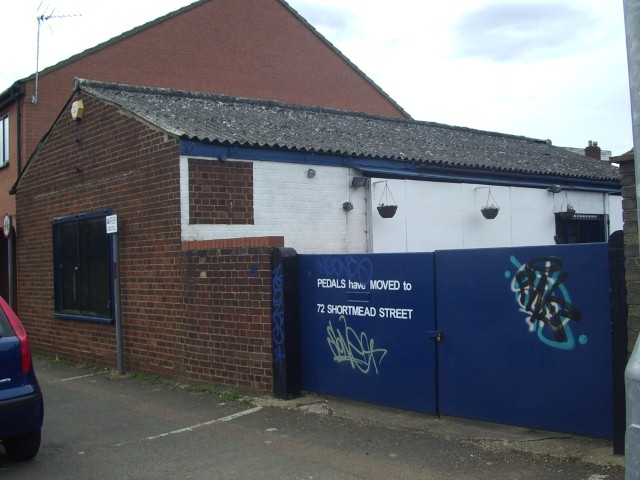

Between Pedals and the railway
is this vacant plot behind the
former Shoulder of Mutton
waiting to be developed; seen here in 2007.
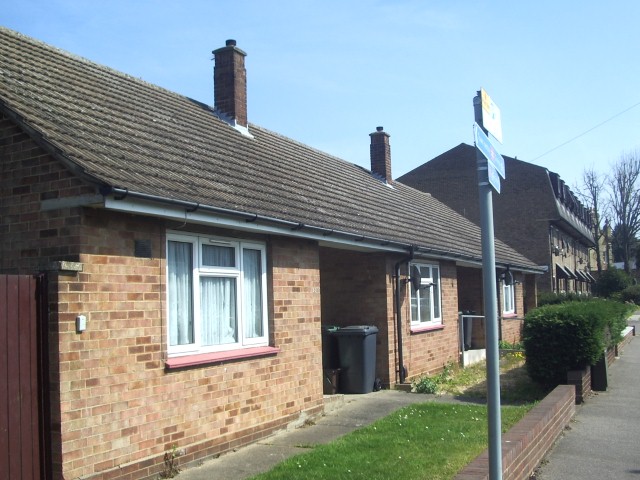
To
the east of the railway bridge three old people's bungalows
replaced more old cottages;
also seen herein 2007
|
|
|
| Then comes a block of five three storied flats |
|
|
|
|
| Finally is the yard entrance to Brignell's, Balderston Warren, solicitors in London Road. |
|


Looking at the area today it is not easy to imagine that there were 67 dwellings here in 1841 and still 65 in 1901. Mostly owned by local traders and rented to agricultural labourers with large families.
%%%%%%%%%%%%%%%